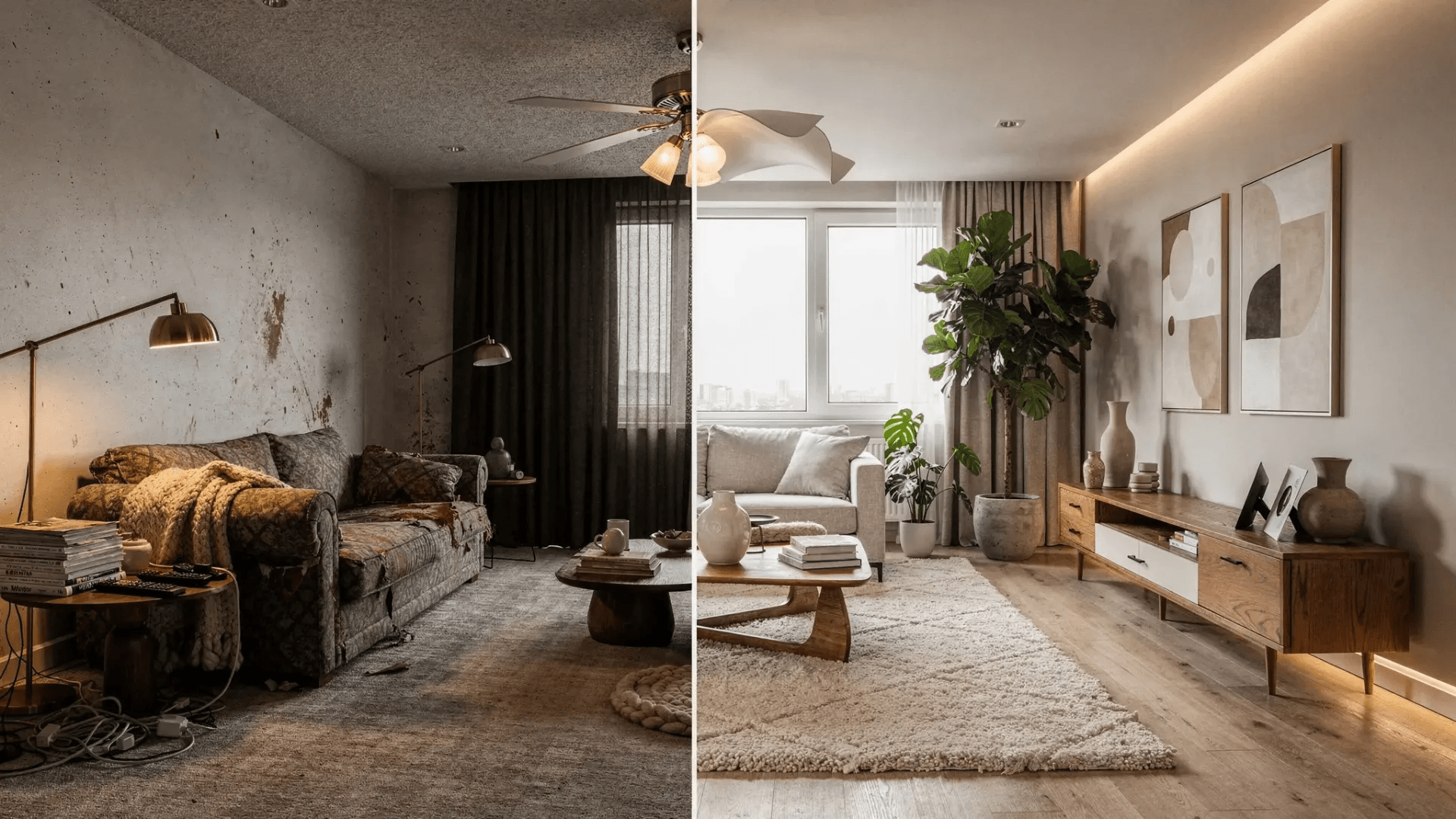
Start by photographing the space from multiple angles to document the before. Note what works, like natural light or architectural details, and what doesn't, like traffic flow problems or clutter hotspots. Pick three priorities: one practical (better storage), one aesthetic (updated palette), and one experiential (cozier seating for movie nights). Build a realistic budget with line items for paint, furniture, lighting, textiles, and a 5–10% contingency. Durable pieces and secondhand finds that age well are worth factoring in early.
Before: furniture shoved against walls, no clear focal point. After: purposeful zones. Anchor seating around a fireplace, media wall, or statement rug. Pull furniture away from the walls to define conversation areas. Float a narrow console behind the sofa for storage without crowding the room. Make sure the front legs of major pieces sit on the rug so everything reads as cohesive.
A single overhead light flattens a room. Three layers work better. Ambient: a dimmable ceiling fixture. Task: reading lamps and directional sconces. Accent: LED strips, table lamps, or picture lights that draw attention to art and texture. Smart bulbs and plug-in dimmers let you shift from bright work mode to a warm evening atmosphere without any rewiring.
Before: mismatched tones or blank neutrality. After: a base neutral like warm gray, soft beige, or muted greige, plus two accent colors for depth. Earthy tones and jewel accents work well here. Terracotta, olive, and deep teal are good examples. Layer in textures such as woven throws, matte ceramics, and tactile wallpaper to make a limited palette feel genuinely rich rather than sparse.
Prioritize multi-functional pieces. Storage ottomans, media cabinets with cord management, and nesting tables are all practical starting points. Measure the space first and use painter's tape to visualize footprints before buying anything. Aim for a sofa depth of 36–40 inches for real comfort. Invest in a quality sofa or armchair since those are the pieces you actually use every day.
Layer in personal touches: a curated gallery wall, a shelf of travel books, a rotating plant display. Group objects in odd numbers (3, 5) for visual interest. Reclaimed wood, organic cotton, and low-VOC finishes bring sustainable materials into the room without looking like a design manifesto.
Example 1, an urban apartment at 500 sq ft: before, cramped, dark, mostly single-use furniture. After, a bulky armchair replaced with a streamlined loveseat, a floor mirror added to amplify light, floating shelves installed for vertical storage. Result: 20% more usable floor space and a noticeably brighter feel.
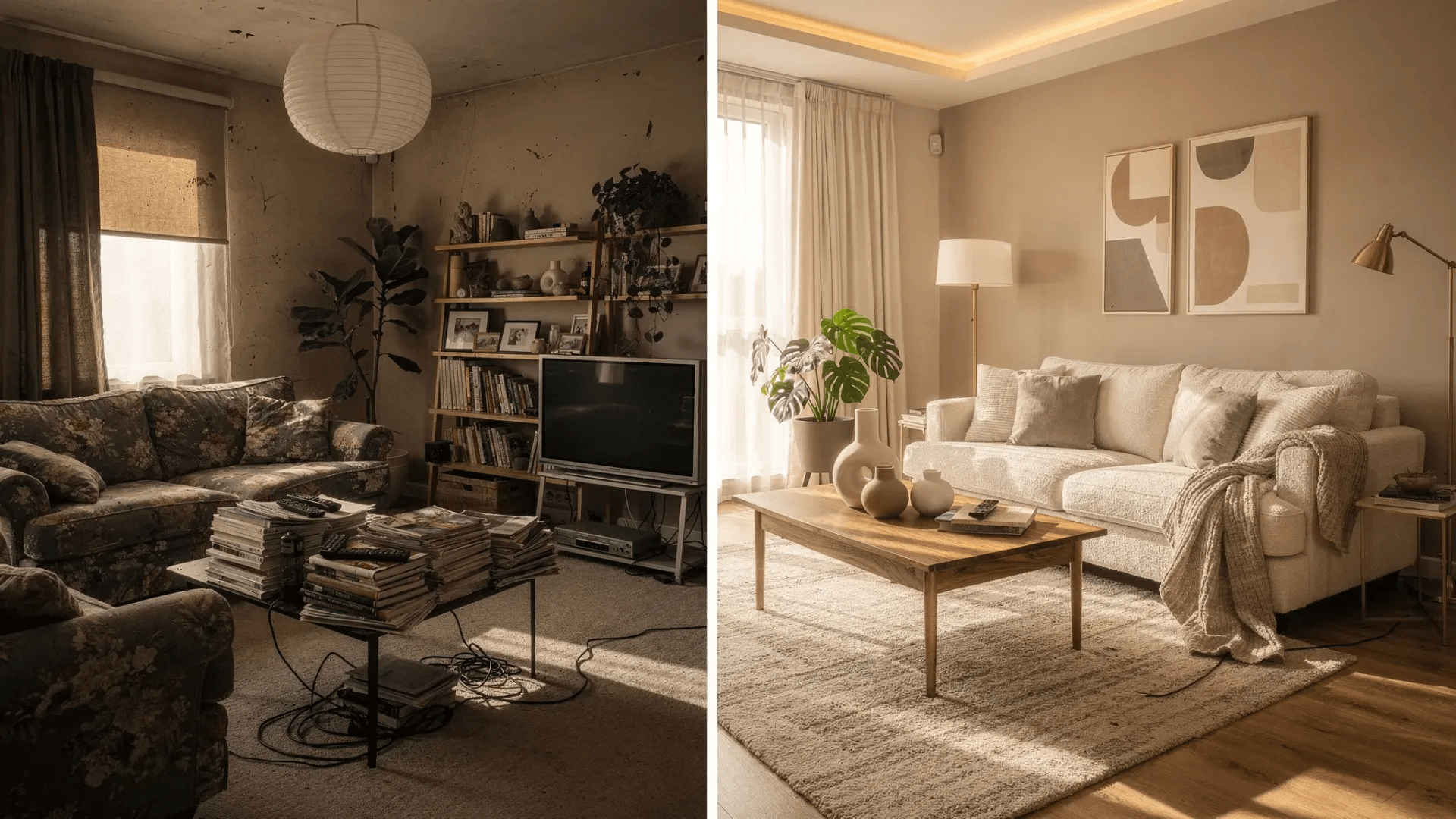
Example 2, a suburban living room: before, dated paint, mismatched furniture. After, walls painted a warm greige, the overhead fixture swapped for a dimmable pendant, an area rug and cohesive throw palette introduced. The whole thing came in under $1,200.
Paint is the fastest transformation available. Replacing cabinet and door pulls costs almost nothing but reads as an instant upgrade. New cushions and a throw can shift the entire vibe seasonally. Reframing prints or installing a gallery ledge lets you rotate art without damaging walls.
Quality and timeless design tend to yield the best resale value over time. Studies show that staged or updated living rooms can increase perceived home value by up to 5–10%. If you plan to sell in the next 3–5 years, choose durable textiles and keep large pieces in neutral tones.
Is there a clear focal point? Does the layout support daily outines? Are lighting layers in place? Is storage both accessible and attractive? Does the room reflect your style while staying versatile?